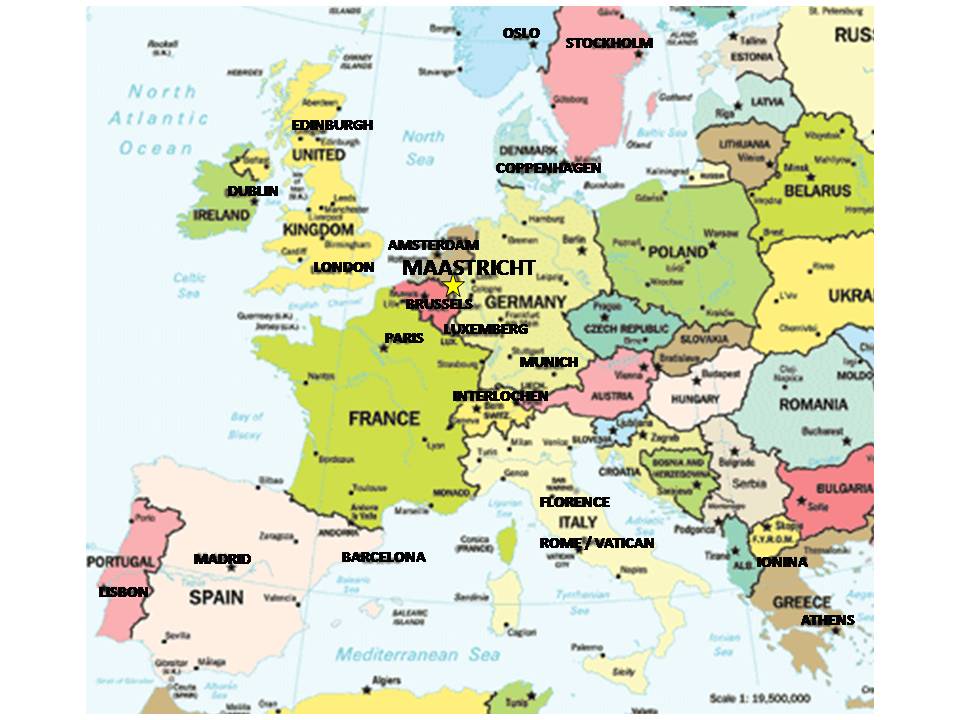
Starting out by having your Brussels 2:09 PM train canceled and flight rescheduled the day earlier was certainly a rough start, but after getting to the airport, getting my 2 bags, including my can of kidney beans and pesto sauce, and talit (prayer shawl), through security and onto the plane, I knew I would be alright. Let me say, Eastern European airlines are like the Motel 6's of aviation. They are manageable and work, but could use a facelift and staff who actually like their jobs. When arriving in Athens I felt like a little kid at the window trying to guess what islands, mountains and cities I was flying over. Once back on the ground I walked along the tar-mat onto a shuttle to the airport, locked up my Ioannina duffle bag, grabbed the X95 bus to Syntagma Square and walked to my hostel on Makri St., the Athens Backpacker. I arrived around 1:45 AM.
Hostelworld review on Athens Backpacker: ''Location: central, ideal. Room: Spacious. Sheets: crispy clean. Staff: couldn't be nicer and more knowledgeable. Breakfast: decent variety but doesn't matter when everything is fresh and you are eating 6 floors up overlooking Athens and in the background is the Acropolis. Couldn't have been a better experience.''
Friday, like last Friday in London, was the day to TOUR the whole city, minus museums. Up at 7:30 AM to maximize my feast-ly breakfast, I wanted to stick to my strict plans. 8:30 Acropolis, 9:30 Acropolis Museum etc. The Acropolis, which was the center of Athenian religious social life, was bruised and batter as usual. Much of the archeology and artifacts are barely standing. Serious conservation and restoration programs are constantly taking place. Much of the ruins are surrounded by scaffolding. Nonetheless, the Acropolis was magnificent and it was certainly good that I got their early!
The Acropolis Museum, just opened this June, was meticulously constructed on top of an archeological site, so that many places in the museum you can look through the glass windowed floor and see ancient ruins below. The museum also sits literally at the base of the Acropolis so that during the day you see the Parthenon’s reflection on the museum wall. The museum houses all of the artifacts collected from the Acropolis, except for the ones that the Greek government is hoping to get back from the British Museum, like much of the Parthenon's remains. The Greek government really did an excellent job with the museum; you would expect so considering it took ten years to construct, and it’s not like all the stuff for its exhibits just randomly showed up.
From the museum I made a spontaneous turn away from the next desired location and decided to climb the nearby hill, Filapappos. From the Acropolis I saw the monument of Filapappos and noticed Filapappos's potential view overlooking the surrounding Athens area, including its angle facing the Piraeus port - and by no means was I disappointed. After the almost 60 degree hike, not actually knowing at all where I was going, I can honestly say that Filapappos is a top ten view from any of my travels thus far. On the peak I scurried around searching for the best photo ops, eyeing the Acropolis on one side, Piraeus port on the other, and the city, suburbs and mountains all around.
Once my infatuation with Filapappos ended, and my passion for following the many random turtles inhabiting Filapappos's hillsides stopped, I realized the time and that the Ancient Agora was calling. But that was the problem - where was Agora? I started learning that each ancient area (eg Agora, Acropolis, Filapappos) were not just monuments but whole areas, whether being an ancient neighborhood, a park or just a small ruin with a wall around it. So escaping Filapappos took much longer than expected.
Finally I arrived for a brief stay at Ancient Agora, which was the ancient political and administrative center of old Athens. Although it must have been grand then, Agora today is literally partial pillars, statues and buildings. You really need a guide who knows what happened or at least a guide book or else everything appears fairly similar. The only thing at Agora that I really appreciated was Hephaestus’s temple, and not just because this temple is the best preserved temple in Athens. Hephaestus is the Blacksmith god, a direct son of Zeus and the god who helped birth Athena, the goddess known for her fierceness and wisdom. I also did a project on Hephaestus in 6th grade. He is my favorite of the Greek gods.
Once completing Agora I ended up in the Monastiraki flee market for some window shopping. After I got the gist of the market I decided to embark on my kosher food hunt. I found the subway, asked numerous directions, and then, upon having an accurate address, enter 64 Ioulinnou st. The people barely spoke English, there were no prepared meals, just raw meat, and they indicated that they sold pork. Major disappointment! We tried a caterer's number but no luck. Such a lead on! So I settled for a premiere, authentic, Spanicopita from a bakery near Victoria Gardens. So good! While, eating in Victoria Gardens, I really noticed a) sever marginalization within Athenian society b) such incredible Athenian ethnic diversity and c) a serious poverty level for what appeared to be mostly black (probably Turkish and North African). The police had no tolerance for street venders selling their crap. If only these venders knew anything about supply and demand, or even marketing. It makes me so mad!
It was now about 2PM. After a little more subwaying, I scurried to see Hadrien's Arch and the Temple of the Olympian Zeus, both of which were purely imaginative experiences because they were a few stacked stones each. Clearly, my patience for ancient Greek ruins faded as the day got longer. Overall, my Athens impression after day one was positive. Athens is such an international city. The different ethnicities, languages, and tourists were remarkable. It is packed with cars, rude bikers and so many ancient ruins. Too be frank, Athens' ruins, although grand and historical, were somewhat disappointing. I can't imagine everything that was there so long ago. Ancient Athens has experienced so much cultural history over the years that the whole city could probably be excavated and considered an archeological site. Yet, despite some disappointment, the passion and dream to experience Ancient Greece instilled in me by Mrs. Goodman/Gotlieb, my 6th grade Ancient Civilizations teacher, has finally been fulfilled. Athens is so rich; I hope the Greeks can continue to protect its history.
After more subwaying, I finally found my ferry on pier E8, the Alexandros, that would take me to my destination island, Aegina, port - Agia Marina. During the hour and a half ride, as I was standing on the bench, foot on the rail (Capt. Morgan pose), and the sun was setting northwest of me, I developed my first impressions of the island: the Saronic Sea's winds are very strong. Its color is a dark blue, almost as dark as Loch Ness. Aegina appears to be very simple, at least its East coast. The coast seems unblemished from picture snapping, 5 star hotel, honeymooning tourists. It is lush, a little rocky, with scattered, conventional boxy, cement, Greek houses. We hit the port. This is when the fun began.....
The day earlier, I called the hotel to confirm my room and ask questions about the island's activities and location, but the receptionist thought that I was actually cancelling. A clear miscommunication, and probably because, neither the receptionist, nor his wife, the two owners of the Hotel Liberty 1, spoke very much English at all. Eventually we figured it out and I got my room, a triple room (even though I booked a double) for myself. I was on the island for one day, I wanted a little privacy to sleep in, relax and have my own place. Now, I was under the impression that this lodging facility had a kitchen, hence why I brought pasta, beans etc. from Maastricht to cook for the next few meals. No such thing. ''This is a hotel” the owner didn't stop saying. So, I walked into town to by supplies. Around the corner I bought a camp, gas-powered burner, a pot, tin and spoon from the grumpiest, craziest (his family said so themselves) old man ever, who spoke no English either. For the record, I initially wanted it, but then I realized the hotel wouldn't allow it, but it was too late because the shop owner put it together already. Oh boy! As I walked into the hotel the owners had a real fit. So, after some discussion, I walked back to the super market to return my items. Grumpy old Greek man had a heart attack. All I did was place the supplies on the counter and stood there. He began throwing things around and shouting in Greek. Oh man. By now I think he, I, and his family outside were getting a little upset. His daughter, I think, came by to help. Thank god she spoke English. At the end, I got to buy the food's worth of items, minus the burner which I couldn't return, so 5.30 euros of food. Do-able. I returned to the hostel with the food, showered in the little corner of my bathroom and grabbed dinner on the beach at a cafe, with the nicest owners - finally some nice Greeks. What a day.
Hostelworld review of Hotel Libtery 1: Location: 2 min from beach, overlooks port. Beautiful. Facilities (sheets, towels, rooms, beds etc.): clean, in need of facelift. Breakfast: Like Mamma's cooking. Ate way too much. Staff: They seem nice, but not to me. No English spoken. Fun: none. The port of Agia Marina is not for hostel-seekers, rather old age retirees interested in window shopping, eating, and doing nothing.
Newest Impression of island: I think there may be a total of 5 people my age within this port city. I really missed the touring season and the locals clearly are burnt out from a summer of business. It is a very old port city with few English speakers. The beach and parallel street along the costs is all hotels, restaurants and stores and then the rest of this part of the island is very Greek, if you know what I mean. I have found few people that are fairly nice, besides those cafe owners. Saturday, I woke up late, ate too much for breakfast as indicated above, went back to sleep, sat on the beach at the tables of the nice cafe owners, because the beach chairs cost 3 euro each, and hung around the hostel waiting for my ferry to get me at 6:15 PM. Overall, Agia Marina is very touristy in nature, but this time of year, it is seemingly full of grumpy locals. I really should've brought an English Greek dictionary. I am finding my stay peaceful, relaxing, but mainly because there isn't much too do, hence why I am writing so much. I also find that traveling alone, especially to a non-social destination, is somewhat lonesome but very reflective. It is amazing how much thinking, realizing and learning that can go on but just listening to the people and places around you. It is kind of nice, but not something that I couldn’t do for a long time. Unfortunately, the weather on Saturday was overcast, but still Agia Marina served its purpose of being a nice vacation and a rejuvenating 24 hours.
Saturday ended with an attempt at spite to the Agia Marianians. After taking an hour job around the impoverished local neighborhoods, I stripped into my boxers and did some swimming along the rocks – not very spiteful. But if I had more time who knows… The grumpy Alexandros crewman rescued me around 6:15 PM. On the Saronic we tossed along the waves. At Piraeus I grabbed the metro to Acropolis to head back to the Athens Backpacker. Wet, cranky and tired of grumpy Greeks, the Backpackers staff informed me of my upgrade into “The Studios”, a six person room with bathroom, kitchen, living room and TV included. Finally! When I arrive to my room I was alone – peacefulness – so I cooked some beans and rice, had a drink and lounged on the couch to watch some US movies.
Sunday morning I woke up early and metroed to the National Archeological Museum. The artifacts were plentiful but the museum was poorly signed and relatively dull, not to mention the staff sitting the corners of EVERY room watched your every movement like hawks at prey. Afterwards, I metroed back to Syntagma Square where I surprisingly made it just in time for the Greek changing of the guards. So hilarious! I did the NYer style and stood on the top of a garbage can to get the best view. So naturally, everyone around me asked me to take pictures for them. Because the guards were marching the police, who are useless, blocked off the streets, including the ones where my X95 airport bus was. Oh well. So I metroed. On the subway I met a LEED certification specialist from San Francisco, who developed a software for sustainable architecture – business networking as usual. At airport I did security, not before getting some Spanikopita for lunch, and settled in to my dinky Olympic, Motel 6 like, plane to Ioannina. Did I say dinky? Correction. A 20 row, propeller aircraft that dipped above the mountains like a coaster car. Oh boy! 3:30 PM I landed in Ioaninana, where a whole new adventure, trip, mission, experience…you name it… began:
Saturday, September 26, 2009
Tuesday, September 22, 2009
09.21.09 - London, Rosh Hashanah
Ryanair is a commuter plane: Advertisements everywhere, including the pilot and flight crew’s announcements; no cargo or seat space at all; and the joke is that bathrooms also cost money…but the flight is cheap assuming you pack light, bring your passport, print your boarding pass and check in online. Plus arrive 30 minutes early.
Once landing at London Standsted, from Eindhoven, Netherlands, Kelly and I Easybus-ed into the Victoria neighborhood, where we eventually found our lodging at the Astor Victoria student hostel. (not a bad place, seemed like fun). For me, because Rosh Hashanah consumed my weekend, I attempted to make Friday my big touring day. So Friday morning, after locking up our luggage in the Victoria Train Station, Kelly and I started our day at Westminster Abbey. At the Abbey I had a realization, which Rabbi Gordon echoed in his High Holiday sermon at the New London Synagogue: religion doesn’t get enough credit. Westminster Abbey is just one, but in my opinion the greatest, houses of worship ever architected. The scope, detail and grandness of the engineering and design, the blood, sweat and money devoted to manifesting these edifices, for a god, is seen across civilizations since the beginning of time. Give religion credit, Rabbi Gordon stated. Religion has been the inspiration behind cathedrals, pyramids, temples….incredible feats of humanity.
From Westminster we met Shari, Christine, and Arianna (Shari’s friend studying in London) to watch the much anticipated changing of the guards. I must say the guards are very awkward, but quite classy. From there we tour Parliament, photographed Big Ben and the London eye. Let me note, I think Parliament is the most beautiful, intricate, interesting and still useful buildings that I have seen in all my travels thus far. Like its constitutions and laws are constantly evolving, debatably, so too are its walls, portraits, externalities etc. The only thing that is set in stone as its actual foundation are its traditions and practices. I think it may be my favorite building in all of Europe. Just amazing!
In the afternoon we walked along the Thames River, stopped at St. Paul’s Cathedral for a choral rendition, crossed the Millennium Bridge, dropped into the Clink dungeon museum and re-crossed the Thames over the Tower Bridge right around sunset. So beautiful! After dinner some dinner we explored Trafalgar Square and Piccadilly Circus. What a day! Basically, London minus museums in a day!
Now I booked a spate hostel for Friday and Saturday because Arianna’s place, where the girls were staying, was farther away from the synagogue then I wanted to walk. The Green Man (bar’s name), Bestplace, Paddington Inn…We can call is “Bestplace”….for satirical purposes. The following is what I will write in my review in hostelworld.com: “Location: perfect. Breakfast: manageable. Sheet cleanliness: suspect, probably unwashed. Towels: None. Common-space: None. Area for luggage: floor. Beds, showers and facilities: architected for starving little people. I have never felt more claustrophobic and crammed in my life. The health board should outlaw such tight quarters. I did not pay for naval living facilities!” But it was 1.3 miles from shul, 1.5 miles from the British Museum and about 2 miles from the Thames. As long as I stayed out I was fine. Oh yeah. I slept on the bottom of a triple-decker bed, and the ceilings must have only been about 10 feet high.
Saturday morning I walked to services, which I didn’t realize were on the Abbey Rd. that the famous Beatles recording studio was on. So yeah, I guess I walked on Abbey Road! I arrive at 8:30 AM and didn’t live until 1 PM. Although long, I found my experience very pleasant and reflective. The gabbis and services leaders were helpful and the congregants were as proud of their congregation as they were friendly and helpful to all those guests to it. Rabbi Jeffry Gordon, JTS alum, and a Rabbi Mayor Rabinowtiz and Rabbi Stephen Garfinkel colleague, was very receptive to my emails prior to the holiday, offering me help where he could during my stay in London. While at the synagogue, I learned that New London (synagogue name) was one of the leading English shuls prior to the death of Rabbi Jacobs five years ago. And it wasn’t until recently, under Rabbi Gordon, that the synagogue is making a resurgence. After services, I went back to the hostel to change and spent my afternoon at the Bristish Museum and in Soho neighborhood. In the evening I met up with the girls for the evening showing of Mouse Trap, the most indigenous London theatrical performance – still going strong at 57 years.
Sunday morning entailed more services. Prior to services, however, I locked up my luggage in the Paddington Train station because I thankfully had to check out of the hostel. From services I booked it to the train station, through Hyde park and to The Bunch of Grapes restaurant where I met up with the girls, who agreed to take my belongings back to Arianna’s flat. That afternoon Kelly and Christine returned to Maastricht and Shari and Arianna did some additional shopping. As for me, I enjoyed the art at the Victoria and Albert Museum. After about an hour plus at the museum I walked across town to the London Eye, where I met up with Shari and Arianna. Shari and I rode the Eye up, while Arianna waited below in the Jubilee Gardens field. Then the three of us enjoyed a classic British meal of Fish and Chips…lots of chips (French fries). Now stuffed we stopped off at a local convenient store, bought a ton of chocolate and wafers, I also bought some milk, and we sat on a bench, under the London Eye, along the Thames, overlooked Big Ben and Parliament, stuffing our facing even more. What a night. The next morning Shari and I caught our 6 AM train back to Maastricht. One of the greatest weekends ever!
Something to note: going to London this weekend, exactly a month since I left the states and exactly a month until my parents visit couldn’t have been better timing. It kind of felt like home….and that’s what I want to briefly address. Not that I plan on moving but out of all the European cities that I have seen, and probably will see, London is the only one I could probably live in. I think I like it even more than NYC, definitely more than Manhattan. Like NYC, there is plenty of options for shopping, food, housing, touring, nightlife and of course Jewish life. But better than NYC it is cleaner, better public transportation, not as claustrophobic, the buildings aren’t as towering and dwarfing, the people are still moving quickly but it appears that they also know how to stop and smell the roses at the local pub a few times a week, and my favorite, it feels like it has more parks. I also must say that I have never seen as many BMWs, Mercedes, Jaguars, when did Porches become signals of mediocrity, Aston Martins, Lotuses, Bentleys and Macerates. It was like a car exhibit. I could be wrong because I have never toured NYC, and I have only been to London for 3 and a half days, but I like London more. Hands down my favorite city. Almost like home, and it’s not just cause everyone speaks English.
Ps please mind my grammer mistakes. I wanted to get the post up.
Once landing at London Standsted, from Eindhoven, Netherlands, Kelly and I Easybus-ed into the Victoria neighborhood, where we eventually found our lodging at the Astor Victoria student hostel. (not a bad place, seemed like fun). For me, because Rosh Hashanah consumed my weekend, I attempted to make Friday my big touring day. So Friday morning, after locking up our luggage in the Victoria Train Station, Kelly and I started our day at Westminster Abbey. At the Abbey I had a realization, which Rabbi Gordon echoed in his High Holiday sermon at the New London Synagogue: religion doesn’t get enough credit. Westminster Abbey is just one, but in my opinion the greatest, houses of worship ever architected. The scope, detail and grandness of the engineering and design, the blood, sweat and money devoted to manifesting these edifices, for a god, is seen across civilizations since the beginning of time. Give religion credit, Rabbi Gordon stated. Religion has been the inspiration behind cathedrals, pyramids, temples….incredible feats of humanity.
From Westminster we met Shari, Christine, and Arianna (Shari’s friend studying in London) to watch the much anticipated changing of the guards. I must say the guards are very awkward, but quite classy. From there we tour Parliament, photographed Big Ben and the London eye. Let me note, I think Parliament is the most beautiful, intricate, interesting and still useful buildings that I have seen in all my travels thus far. Like its constitutions and laws are constantly evolving, debatably, so too are its walls, portraits, externalities etc. The only thing that is set in stone as its actual foundation are its traditions and practices. I think it may be my favorite building in all of Europe. Just amazing!
In the afternoon we walked along the Thames River, stopped at St. Paul’s Cathedral for a choral rendition, crossed the Millennium Bridge, dropped into the Clink dungeon museum and re-crossed the Thames over the Tower Bridge right around sunset. So beautiful! After dinner some dinner we explored Trafalgar Square and Piccadilly Circus. What a day! Basically, London minus museums in a day!
Now I booked a spate hostel for Friday and Saturday because Arianna’s place, where the girls were staying, was farther away from the synagogue then I wanted to walk. The Green Man (bar’s name), Bestplace, Paddington Inn…We can call is “Bestplace”….for satirical purposes. The following is what I will write in my review in hostelworld.com: “Location: perfect. Breakfast: manageable. Sheet cleanliness: suspect, probably unwashed. Towels: None. Common-space: None. Area for luggage: floor. Beds, showers and facilities: architected for starving little people. I have never felt more claustrophobic and crammed in my life. The health board should outlaw such tight quarters. I did not pay for naval living facilities!” But it was 1.3 miles from shul, 1.5 miles from the British Museum and about 2 miles from the Thames. As long as I stayed out I was fine. Oh yeah. I slept on the bottom of a triple-decker bed, and the ceilings must have only been about 10 feet high.
Saturday morning I walked to services, which I didn’t realize were on the Abbey Rd. that the famous Beatles recording studio was on. So yeah, I guess I walked on Abbey Road! I arrive at 8:30 AM and didn’t live until 1 PM. Although long, I found my experience very pleasant and reflective. The gabbis and services leaders were helpful and the congregants were as proud of their congregation as they were friendly and helpful to all those guests to it. Rabbi Jeffry Gordon, JTS alum, and a Rabbi Mayor Rabinowtiz and Rabbi Stephen Garfinkel colleague, was very receptive to my emails prior to the holiday, offering me help where he could during my stay in London. While at the synagogue, I learned that New London (synagogue name) was one of the leading English shuls prior to the death of Rabbi Jacobs five years ago. And it wasn’t until recently, under Rabbi Gordon, that the synagogue is making a resurgence. After services, I went back to the hostel to change and spent my afternoon at the Bristish Museum and in Soho neighborhood. In the evening I met up with the girls for the evening showing of Mouse Trap, the most indigenous London theatrical performance – still going strong at 57 years.
Sunday morning entailed more services. Prior to services, however, I locked up my luggage in the Paddington Train station because I thankfully had to check out of the hostel. From services I booked it to the train station, through Hyde park and to The Bunch of Grapes restaurant where I met up with the girls, who agreed to take my belongings back to Arianna’s flat. That afternoon Kelly and Christine returned to Maastricht and Shari and Arianna did some additional shopping. As for me, I enjoyed the art at the Victoria and Albert Museum. After about an hour plus at the museum I walked across town to the London Eye, where I met up with Shari and Arianna. Shari and I rode the Eye up, while Arianna waited below in the Jubilee Gardens field. Then the three of us enjoyed a classic British meal of Fish and Chips…lots of chips (French fries). Now stuffed we stopped off at a local convenient store, bought a ton of chocolate and wafers, I also bought some milk, and we sat on a bench, under the London Eye, along the Thames, overlooked Big Ben and Parliament, stuffing our facing even more. What a night. The next morning Shari and I caught our 6 AM train back to Maastricht. One of the greatest weekends ever!
Something to note: going to London this weekend, exactly a month since I left the states and exactly a month until my parents visit couldn’t have been better timing. It kind of felt like home….and that’s what I want to briefly address. Not that I plan on moving but out of all the European cities that I have seen, and probably will see, London is the only one I could probably live in. I think I like it even more than NYC, definitely more than Manhattan. Like NYC, there is plenty of options for shopping, food, housing, touring, nightlife and of course Jewish life. But better than NYC it is cleaner, better public transportation, not as claustrophobic, the buildings aren’t as towering and dwarfing, the people are still moving quickly but it appears that they also know how to stop and smell the roses at the local pub a few times a week, and my favorite, it feels like it has more parks. I also must say that I have never seen as many BMWs, Mercedes, Jaguars, when did Porches become signals of mediocrity, Aston Martins, Lotuses, Bentleys and Macerates. It was like a car exhibit. I could be wrong because I have never toured NYC, and I have only been to London for 3 and a half days, but I like London more. Hands down my favorite city. Almost like home, and it’s not just cause everyone speaks English.
Ps please mind my grammer mistakes. I wanted to get the post up.
Wednesday, September 16, 2009
09.13.09 - Amsterdam and The Hague
I know you must be wondering why the local Dutch cities if I seemingly can travel anywhere in western Europe. This weekend we had a mandatory Muhlenberg group day trip to Amsterdam, so why not spend an extra day if I am already going to be in the area. Our Muhlenberg group boarded our coach bus for Amsterdam around 9AM, unfortunately 2 hours late. When we arrived we indulged ourselves for lunch at a Pancake Restaurant on Prinsengracht. Then we walked off our thousand calorie meal on our way to the Rijksmuseum, where we got to enjoy Vermeer, Rembrant and other indigenous paintings from the 16th and 17th centuries. From the museum we went to the Heineken factory for the official Heineken ‘Experience’ – no joke that is what it is called – where Heineken must have done everything possible to keep us there. The ‘experience’ had beer-making demonstrations, virtual tours, horses, commercial exhibits, couches, club areas and of course free drinks. After Heineken, about half of the Muhlenberg group departed back to Maastricht, while the other half, divided into three groups of friends, remained in Amsterdam for the weekend. Obviously this is when the fun began!
For this weekend I was bunking up with Josh Willig and Mike Feinberg, two guys who I have gotten considerably close with while here in Maastricht. The three of us diverted from the large group of students remaining in Maastricht to find our hostel for the night. Having been in Amsterdam before, and having the only map in my pocket, I took a kind of tour guide and navigator role. For me, this time in Amsterdam was much more relaxed. I had felt as though I had seen much of the city before, which I had, and therefore, this time, I was far less inclined to rush everywhere, to see all the tourist sites, monuments and museums. This time I really got to enjoy the culture, the beauty, and certainly the uniqueness of the city. Eventually, we got to our hostel, The Christian Shelter City, and checked in. Allow me to mention a word about this hostel: First off, lets analyze the words in the name of the hostel. Christian – the hostel had Jesus signs, with axioms like, “Jesus is Lord”, and New Testament quotes everywhere. They also offered prayer services and Christian discussion groups each day. There were free copies of different Bibles available. Now I by no means minded this Christian exposure. What I did mind was my interpretation of the second important word in the hostel’s name. Shelter – I will attempt to quote Mike’s reaction. “When it said shelter city, I didn’t think they meant it was actually like a homeless shelter.” Look, I am no prissy girl but common. The sheets were grimy, blankets stained, pillows felt like they were run over by an 18-wheeler, no towels available, bathrooms small, walls brownish…shall I go on. You get it. Now lets talk about City – True, the hostel was in the center of the city of Amsterdam, but inside the hostel it didn’t need to feel like an urban slum. To be frank, I passionately hate the man who at 2:30 in the morning became the ninth person, in my 8 person room nonetheless, by placing a cot in the only walkway between all of the beds. To make matters worse he was the worst snorer I have ever experienced. Lets just say that I will never go back to that hostel again!
But besides that, the night in Amsterdam was a blast. My friends and I enjoyed the nightlife very much on Friday night. Enough said. Between New Market, Dam Square, the RLD, and Rembrantplein there was plenty of entertainment to go around. Saturday morning, after we escaped from the Shelter City and locked our belongings up in a locker in the central station, Josh and Mike went to Anne Frank’s house and the Van Gogh museum, both of which I had seen, and I went to services at the famous and ancient Portuguese Synagogue. Besides the two undercover security guards who wouldn’t let me into the synagogue without a few rounds of interrogation and convincing, my experience at this shul was very memorable. The torah reading was very unique, the hats the clergyman wore were different and obviously the shul was extremely grand. It was sad though that so few people attended services. WWII really had its impact on the Jewish community of Amsterdam. After services and a light Kiddush in a room across the courtyard, I piggybacked onto a group of Israelis who were in Amsterdam for a conference, who were offered a free tour of the Jewish museum. After the museum I met back up with Mike and Josh. The three of us hung around for the duration of the afternoon, including spending about an hour watching a chess game in a small plaza and another hour in the Flower market. From Amsterdam we took a train to The Hague.
We arrived in The Hague in the evening. Immediately, we went straight for Tram #1 to our beached themed hostel, Jorplace, checked in, dropped our stuff and scurried five minutes up the street to enjoy the sunset on the beach over the North Sea. Then we ate some dinner, hung out in the lounge and bar of the hostel while watching some soccer, and eventually made our way to the boardwalk for some unsuccessful bar hopping. Afterwards we packed it in.
In the morning we enjoyed the incredible breakfast spread, and then made our way to the train station to lock up our belongings for the day. In The Hague we saw the parliament, Peace Palace, International Court and I would say, our favorite, the MC Escher exhibit. He is the artist that does all of the crazy images that play with your eyes between the 2nd and 3rd dimension. We walked around the city a lot and really got a great taste for the atmosphere. By around 3 PM we were pretty tired from the busy weekend and decided it was time to return home to Maastricht. Overall, I am happy that we explored various domestic cities. Traveling to other countries, although being in the EU, adds additional stressors that were nice to avoid this weekend.
For this weekend I was bunking up with Josh Willig and Mike Feinberg, two guys who I have gotten considerably close with while here in Maastricht. The three of us diverted from the large group of students remaining in Maastricht to find our hostel for the night. Having been in Amsterdam before, and having the only map in my pocket, I took a kind of tour guide and navigator role. For me, this time in Amsterdam was much more relaxed. I had felt as though I had seen much of the city before, which I had, and therefore, this time, I was far less inclined to rush everywhere, to see all the tourist sites, monuments and museums. This time I really got to enjoy the culture, the beauty, and certainly the uniqueness of the city. Eventually, we got to our hostel, The Christian Shelter City, and checked in. Allow me to mention a word about this hostel: First off, lets analyze the words in the name of the hostel. Christian – the hostel had Jesus signs, with axioms like, “Jesus is Lord”, and New Testament quotes everywhere. They also offered prayer services and Christian discussion groups each day. There were free copies of different Bibles available. Now I by no means minded this Christian exposure. What I did mind was my interpretation of the second important word in the hostel’s name. Shelter – I will attempt to quote Mike’s reaction. “When it said shelter city, I didn’t think they meant it was actually like a homeless shelter.” Look, I am no prissy girl but common. The sheets were grimy, blankets stained, pillows felt like they were run over by an 18-wheeler, no towels available, bathrooms small, walls brownish…shall I go on. You get it. Now lets talk about City – True, the hostel was in the center of the city of Amsterdam, but inside the hostel it didn’t need to feel like an urban slum. To be frank, I passionately hate the man who at 2:30 in the morning became the ninth person, in my 8 person room nonetheless, by placing a cot in the only walkway between all of the beds. To make matters worse he was the worst snorer I have ever experienced. Lets just say that I will never go back to that hostel again!
But besides that, the night in Amsterdam was a blast. My friends and I enjoyed the nightlife very much on Friday night. Enough said. Between New Market, Dam Square, the RLD, and Rembrantplein there was plenty of entertainment to go around. Saturday morning, after we escaped from the Shelter City and locked our belongings up in a locker in the central station, Josh and Mike went to Anne Frank’s house and the Van Gogh museum, both of which I had seen, and I went to services at the famous and ancient Portuguese Synagogue. Besides the two undercover security guards who wouldn’t let me into the synagogue without a few rounds of interrogation and convincing, my experience at this shul was very memorable. The torah reading was very unique, the hats the clergyman wore were different and obviously the shul was extremely grand. It was sad though that so few people attended services. WWII really had its impact on the Jewish community of Amsterdam. After services and a light Kiddush in a room across the courtyard, I piggybacked onto a group of Israelis who were in Amsterdam for a conference, who were offered a free tour of the Jewish museum. After the museum I met back up with Mike and Josh. The three of us hung around for the duration of the afternoon, including spending about an hour watching a chess game in a small plaza and another hour in the Flower market. From Amsterdam we took a train to The Hague.
We arrived in The Hague in the evening. Immediately, we went straight for Tram #1 to our beached themed hostel, Jorplace, checked in, dropped our stuff and scurried five minutes up the street to enjoy the sunset on the beach over the North Sea. Then we ate some dinner, hung out in the lounge and bar of the hostel while watching some soccer, and eventually made our way to the boardwalk for some unsuccessful bar hopping. Afterwards we packed it in.
In the morning we enjoyed the incredible breakfast spread, and then made our way to the train station to lock up our belongings for the day. In The Hague we saw the parliament, Peace Palace, International Court and I would say, our favorite, the MC Escher exhibit. He is the artist that does all of the crazy images that play with your eyes between the 2nd and 3rd dimension. We walked around the city a lot and really got a great taste for the atmosphere. By around 3 PM we were pretty tired from the busy weekend and decided it was time to return home to Maastricht. Overall, I am happy that we explored various domestic cities. Traveling to other countries, although being in the EU, adds additional stressors that were nice to avoid this weekend.
Sunday, September 6, 2009
09.04-06.09 – Interlaken, Switzerland
First weekend of travel of the semester. Sure the five day study trip was adventurous and touristy, but this weekend we planned, we organized, we conceptualized, and we executed, which as we anticipated correctly, was twenty-fold more gratifying. I literally just returned from the weekend journey. It took almost 12 hours to make it back but it was well worth it. Let me tell you how weekend Interlaken, and Team Goedemorgen (Chu-de-mor-chen) went.
Shari, Christine, Kelly and I left the guesthouse on Friday morning at 5:15 AM in the pitch black and cold frigidness on our bikes for a 5:45 AM bus to Aachen Hbf station. In Aachen, at 7:50 AM, we boarded our first of many trains leading us towards Interlaken. By 4 PM, and three train transfers later, we had made it to our destination, unfortunately to be greeted by some unfriendly clouds and rain. We trapsed from the train station, each one of us with a backpack and an additional bag of food provisions on our backs, to our beautiful, all encompassing hostel, the Backpacker’s Villa. This hostel I would recommend to anyone. It had clean linens, full kitchens, internet, free printing, drinks, a great breakfast, and the staff was outstanding – really anything and everything you could ask for. From the hostel we went out into the city. A little about Interlaken: Nestled at the base of the Swiss Alps, in front of Jungfrau Mt., its snow caps make it the highest point in all of Europe, Interlaken is a little city, within the valley of mile high mountains. Its main industry is noticeable tourism, which is driven by its beautiful scenery and incredible outdoor adventure opportunities, such as skydiving, zorbing, paragliding, hiking, climbing and of course skiing. The water in Interlaken is the bluest, greenest water in the world. My theory is that there must be little people who every morning put Gatorade Glacier Ice flavored powder into the water to give it such a euphoric tinge. People in Interlaken are from all over the world. Everyone’s got their own story. Although we came ironically the weekend of the national marathon up Jungfrau, most of our time was spent walking around, catching the various glimpses and angles of the surrounding breathe-taking scenery, and indulging in the Swiss culture. The highlights of the weekend were the following events in order:
1. Without a question: Canyoning check out the video (http://www.outdoor-interlaken.ch/en/tours/detail/tours_id/17) Along with six other Berg guys that were also in Interlaken, the ten of us, plus Steph and Jon, our guides, (so total = group of 12) spent two hours sliding, swimming, hiking, repelling, jumping and flipping down and around the canyon, in and out of water. Keeping us warm throughout the whole excursion were full wet suits, shoes, helmets, life jackets and harnesses... and of course our body warmth. Once dressed in our outfits we were referred to solely by the names on our helmets – mine was ‘Lips’. Personally, I was very nervous for a series of the free fall jumps, mostly the 20 plus foot jump from the rocks into the water below. But once we got to this one specific jump, after slight deliberation, a prayer, a short, redeeming, but probably unnecessary story to Jon, and a promise to Jon to drive from his native New Hampshire to my hometown in Jersey to tell my parents if I didn’t make it, I plunged 20 plus feet free falling into the depth of the water below me. Never had I thought I would do something of that magnitude. For many of my peers on the excursion the jump was cake, but for me, it had been something that I had been saying I had to do ever since I planned to go to Europe. Abroad is all about doing some crazy (within limitations) things. Other memorable moments during canyoning was jumping about 8 feet off a rock, while flipping mid air into the waters below. It was like a full out front roll. Also balancing rocks on top of each other for good luck, the same way the Indians apparently did it centuries earlier. And swimming under the ‘waterfall of reclaiming virginity’ (not exactly sure why this names applied to these falls). I don’t know how or why I did some of the things during canyoning, but thanks to the guides, especially Jon, and thanks to my friends’ encouragement, I was able to conquer the major fears. What an experience!
2. Sunday morning Kelly and I woke up very early for 2 and a half hour much anticipated hike to the top of the nearest mountain, Harderkulm. We took the red and white, medium ranked, trail straight up. It was great exercise; we loved our much needed and highly helpful hiking sticks and loved the intermittent stops and unbelievable, and highly motivating, views even more. The ultimate hike, with the ultimate view for a reward at the top, the view, truly capped off an unforgettable Interlaken weekend.
3. A tie between following a band of Swiss clowns and dinner at Des Alps. Adrain, the lead trumpet player/clown/professional technical cheese expert (no joke) and his Country’s band of clown instrumentalists serenaded us and many locals with classical Swiss polka music, mixed in with the occasional American pop song. Afterwards, we eventually settled on dinner at Des Alps. Best DINNER EVER!
Overall, choosing Interlaken for our first travel weekend couldn’t’ have been a better decision. The weather was perfect, topography and scenery calming and rejuvenating, and the carefree atmosphere was very pleasing. Just not having to rush form museum to monument made Interlaken very manageable as well. Plus, if we would have waited any longer the water would have been too cold to do a lot of activities. The Maastricht semester has had its crazy fun and challenging acclamation, therefore a relaxing weekend in the Swiss Alps was exactly what we needed. I just wish that the gun to start the marathon didn’t scare the crap out of us at 9 Am on Saturday morning and that we didn’t miss our train from Cologne to Aachen (both not our fault). But, even though we were forced to endure a 12 hour commute back to Maastricht, Interlaken was still worth it, incredible and somewhere I definitely recommend to all and hope to return to. The Swiss Alps are unlike anywhere else in the world!
Shari, Christine, Kelly and I left the guesthouse on Friday morning at 5:15 AM in the pitch black and cold frigidness on our bikes for a 5:45 AM bus to Aachen Hbf station. In Aachen, at 7:50 AM, we boarded our first of many trains leading us towards Interlaken. By 4 PM, and three train transfers later, we had made it to our destination, unfortunately to be greeted by some unfriendly clouds and rain. We trapsed from the train station, each one of us with a backpack and an additional bag of food provisions on our backs, to our beautiful, all encompassing hostel, the Backpacker’s Villa. This hostel I would recommend to anyone. It had clean linens, full kitchens, internet, free printing, drinks, a great breakfast, and the staff was outstanding – really anything and everything you could ask for. From the hostel we went out into the city. A little about Interlaken: Nestled at the base of the Swiss Alps, in front of Jungfrau Mt., its snow caps make it the highest point in all of Europe, Interlaken is a little city, within the valley of mile high mountains. Its main industry is noticeable tourism, which is driven by its beautiful scenery and incredible outdoor adventure opportunities, such as skydiving, zorbing, paragliding, hiking, climbing and of course skiing. The water in Interlaken is the bluest, greenest water in the world. My theory is that there must be little people who every morning put Gatorade Glacier Ice flavored powder into the water to give it such a euphoric tinge. People in Interlaken are from all over the world. Everyone’s got their own story. Although we came ironically the weekend of the national marathon up Jungfrau, most of our time was spent walking around, catching the various glimpses and angles of the surrounding breathe-taking scenery, and indulging in the Swiss culture. The highlights of the weekend were the following events in order:
1. Without a question: Canyoning check out the video (http://www.outdoor-interlaken.ch/en/tours/detail/tours_id/17) Along with six other Berg guys that were also in Interlaken, the ten of us, plus Steph and Jon, our guides, (so total = group of 12) spent two hours sliding, swimming, hiking, repelling, jumping and flipping down and around the canyon, in and out of water. Keeping us warm throughout the whole excursion were full wet suits, shoes, helmets, life jackets and harnesses... and of course our body warmth. Once dressed in our outfits we were referred to solely by the names on our helmets – mine was ‘Lips’. Personally, I was very nervous for a series of the free fall jumps, mostly the 20 plus foot jump from the rocks into the water below. But once we got to this one specific jump, after slight deliberation, a prayer, a short, redeeming, but probably unnecessary story to Jon, and a promise to Jon to drive from his native New Hampshire to my hometown in Jersey to tell my parents if I didn’t make it, I plunged 20 plus feet free falling into the depth of the water below me. Never had I thought I would do something of that magnitude. For many of my peers on the excursion the jump was cake, but for me, it had been something that I had been saying I had to do ever since I planned to go to Europe. Abroad is all about doing some crazy (within limitations) things. Other memorable moments during canyoning was jumping about 8 feet off a rock, while flipping mid air into the waters below. It was like a full out front roll. Also balancing rocks on top of each other for good luck, the same way the Indians apparently did it centuries earlier. And swimming under the ‘waterfall of reclaiming virginity’ (not exactly sure why this names applied to these falls). I don’t know how or why I did some of the things during canyoning, but thanks to the guides, especially Jon, and thanks to my friends’ encouragement, I was able to conquer the major fears. What an experience!
2. Sunday morning Kelly and I woke up very early for 2 and a half hour much anticipated hike to the top of the nearest mountain, Harderkulm. We took the red and white, medium ranked, trail straight up. It was great exercise; we loved our much needed and highly helpful hiking sticks and loved the intermittent stops and unbelievable, and highly motivating, views even more. The ultimate hike, with the ultimate view for a reward at the top, the view, truly capped off an unforgettable Interlaken weekend.
3. A tie between following a band of Swiss clowns and dinner at Des Alps. Adrain, the lead trumpet player/clown/professional technical cheese expert (no joke) and his Country’s band of clown instrumentalists serenaded us and many locals with classical Swiss polka music, mixed in with the occasional American pop song. Afterwards, we eventually settled on dinner at Des Alps. Best DINNER EVER!
Overall, choosing Interlaken for our first travel weekend couldn’t’ have been a better decision. The weather was perfect, topography and scenery calming and rejuvenating, and the carefree atmosphere was very pleasing. Just not having to rush form museum to monument made Interlaken very manageable as well. Plus, if we would have waited any longer the water would have been too cold to do a lot of activities. The Maastricht semester has had its crazy fun and challenging acclamation, therefore a relaxing weekend in the Swiss Alps was exactly what we needed. I just wish that the gun to start the marathon didn’t scare the crap out of us at 9 Am on Saturday morning and that we didn’t miss our train from Cologne to Aachen (both not our fault). But, even though we were forced to endure a 12 hour commute back to Maastricht, Interlaken was still worth it, incredible and somewhere I definitely recommend to all and hope to return to. The Swiss Alps are unlike anywhere else in the world!
Thursday, September 3, 2009
August 31, 2009 - Dutch Culture Overview
Today is my last day before classes officially start, so I will use this last day of summer, last day of freedom, to reflect on my reactions to these new people that I will be living around for the next 4 months. Using my keen observations, detailed analysis and frequent first-hand experiences, I will try to paint a picture of the common Dutch man or woman appearances, tendencies, habits, opinions, and lifestyles. Just imagine….
I would say, overall, the Dutch are kind of quorky, in a respectful way. They aren’t goofy or odd or unusual, just quorky. Allow me to provide some examples:
A. It is perfectly normal for men to where unusually colored, or often un-matching socks, with sneakers, like high black socks with brown sneakers.
B. I still haven’t figured out why Europeans, especially the Dutch, love to wear a form of capri bottoms, especially the men.
C. “Liberal” – you couldn’t hear that word enough about the Dutch people. Whether it is legalizing, or ‘decriminalizing’ marijuana, having a laissez-faire mentality towards many governmental policies, or the whole Red Light District in Amsterdam scene, the Dutch are liberal. But liberal can also encompass accepting. The Dutch are open and accepting to many forms of people, and seek to understand and accommodate different opinions and lifestlyes.
D. Dutch dancing is not like American dancing today, yesterday or even like the dancing of the last two generations. I have been to a fair amount of clubs, and a concert or two, and all I can understand is that the Dutch appear to do more bopping and jumping then actual dancing. I think Dutch dancing is really just dancing alone next to someone else who is also dancing alone. So if you get a lot of people dancing alone, it appears as if they are actually dancing in unison…somewhat. This has posed many a problem when trying to dance with female prospects. What I am learning is that I can just flail my arms, shake my hips and do the occasionally raving jump and it appears as though I am as awkward a dancer as the Dutch. It is a work in progress.
Most Dutch people, especially in cities, ride bikes regardless of their age. And the Dutch don’t just ride their bikes! The women have perfect posture, sitting up perfectly straight, allowing their beautiful blonde or brunette hair to fly in the wind. What a site….. But the Netherlands takes biking many steps further (and I expect this is much of Europe). Roads are designed with bike lanes, laws and lights – many of those I still haven’t figured out. Streets are outlined by first sidewalks, then a curb, then bike lines, then a divider, and then the street. Rotaries (circles) have a bike line around the perimeter and special bike lanes next to the car lanes to enter or exit the rotaries. A lot of this can be figured out as you go because all the bike lines are marked with a purplish tinge along the pavement. But I will say this, these bike lanes are not meant for speed racing or trick jumps. I know from firsthand experience. Let’s just say that I saw a speed hump in my bike lane, tried to jump it with my brand new, second hand, thin-tired, road bike, and it didn’t end well, as indicated by the long scrape on my forearm. Lastly, just imagine navigating the bikes in the rain (like this morning), throughout traffic, with wet cobblestones. I feel like I am ready for the Tour de France, just assuming my bottom side heals from the imposing bike seat.
Societal bike law discourages passing the biker in front of you, unless they are some obnoxious American who has no idea what the hell he is doing (of course not me). What I have realized is that this fosters a slower pace and a more relaxing biking experience. And similar to the biking experience, I am finding that the Dutch live at a slower pace overall. Enjoy this picture: Imagine a full street along a waterfront full of restaurants, cafes and bars all with outdoor seating. In the USA this is a common site as well, but instead of having outdoor tables with chairs facing each other, in the Netherlands it appears as though all outdoor seating chairs face out, so people sit side-by-side and not across from each other. I didn’t understand what such anti-socialness was created until Kelly and I experienced it recently. As we sipped our coke and apple juice (yes I did get apple juice) and looked out into the crowds of people passing by, we made some small talk, and thoroughly enjoyed ourselves, as the clock ticked away. After an hour of people-watching, small conversation, many deep breathes and constant fresh air, I realized that never had I had a more relaxing taste of apple juice in my life.
The Dutch also always look put together. Jeans, a shirt, often with a collar, and nice shoes. The typical accessories of a nice coat, bag, or hat. Couples stroll along, hand in hand, as if they were just picked out of a clothing magazine. And the women ….. so natural! It seems like most of the women just put on jeans and a shirt, put their hair into a ponytail, and walk out of the door. There isn’t an emphasis on makeup, hair-styling, and the most fashionable, celebrity promoted clothing. The Dutch women are natural beauties, and they know it. There are however, a few people who don’t wear the typical jeans and a nice shirt but that’s because they usually are a biker by hobby or manager of a gym. You rarely see sweat pants, baggy jeans, yoga/palates spandex, athletic jumpsuits etc. The bottom line is that people dress their part and always look good doing it.
Like fashion and female styling is not a primary component in the Dutch cultural fabric, either is pretentious belongings. You will never see a massive SUV or pimped out sedan. Cars are for transportation and not a display of social status – and that’s for the people who even have cars. Similarly, clothing is for wearing and rarely, from what I have witnessed, for showing off. Granted people have personal preferences and some people where more glamorous outfits then others, but what I see is that people have clothing not to show off, show their worth, or fit in. The same goes for other belongings as well. The Dutch, although always presentable, are always seemingly much more down to earth about the things they have.
Conversely, a major criticism of the Dutch that I have is how many students perceive education and therefore charter their careers, and I think this is not just the Dutch but much of Europe. Because the government so heavily subsidizes university education Dutch students don’t take advantage of their education as much as Americans do. (To Note: University of Maastricht only costs 1300 euros a year whereas Americans pay upwards of 45,000 dollars) I would say that most Americans that go to college know that their parents labored and saved for decades just to provide their children with a college education. Many American students are funding their own education through loans, scholarships and jobs. The value of the college education in America, overall, is much more coveted, and therefore the pressure to succeed, and maximize the college education is much greater. In the Netherlands, students yearn to ‘just pass’, which is a 5.5 out of 10, whereas in America many students are not satisfied with anything lower then some degree of a B or an A. The drive to be the best in the Netherlands is rare; rather, the goal is to make it, get by, and reach a certain plateau. It is just a difference in culture. I am not saying that I agree with the cost of American college tuition. Frankly, America needs to address the price of both private and public institutions. Today, thousands of foreign students strive to study in America but most of them only can afford it with some form of a scholarship or grant. As the world’s academic institutions improve, I believe that fewer international students will come to America to study if the price of tuition continues to rise.
The effect of Dutch university education for students is that many people don’t seem to go to university saying the equivalent of, ‘I want to work on Wall St.’, ‘I want to find the cure for cancer’, ‘I want to be a State Senator’, or ‘I want to go to Yale Law.’ In America, if you are the best, you can have those opportunities. In the Netherlands those careers are certainly respected but not sought after as much. People can make ends meet, and even be comfortable being a full time waiter at a pub, or local servicemen, taxi driver, or public works laborer. And there is nothing wrong with those careers. Additionally, many people, across Europe, will claim unemployment for a year to three years because they can earn almost as much from the government as if they were working. I am finding that the desire to be in the top payment bracket is also minimized because of how high their income is taxed. Until a few years ago the top salary bracket for the Dutch, which is 40,000 Euroes or more annually, was taxed at 72%, now it is 56% - so why work! And that is a fundamental difference. Living in this environment has shown me both sides of the coin. On one hand, not stressing 24/7 about making a ton of money and being the absolute best at whatever you do can provide you with a more stress-free, worry free, or demanding lifestyle. True, you will not have as much financial flexibility and therefore be unable to do everything that you want, but intern you will have a calmer lifestyle. But conversely, if you work to be the best, make the most money, and succeed at that, you will have the opportunities to do whatever you want. Sure at times life may get extremely hectic, and you will fulfill the American ‘work-o-holic’ stereotype, but isn’t it worth it? So that is the balance that I seek…….
Overall, the Dutch are very pleasant, very helpful, very awkwardly fun, and live in general at a much slower pace in life. They appear more modest and less arrogant then the American stereotype. They are accepting and honest, straight-forward and sharp. The women are much better looking than the men, no joke. And all Dutch people know the value of a good outdoor seat, with a drink, and a timeless lunch break. I hope to learn a lot more from the Dutch, while still maintaining my American (protestant) work ethic. More to come….
I would say, overall, the Dutch are kind of quorky, in a respectful way. They aren’t goofy or odd or unusual, just quorky. Allow me to provide some examples:
A. It is perfectly normal for men to where unusually colored, or often un-matching socks, with sneakers, like high black socks with brown sneakers.
B. I still haven’t figured out why Europeans, especially the Dutch, love to wear a form of capri bottoms, especially the men.
C. “Liberal” – you couldn’t hear that word enough about the Dutch people. Whether it is legalizing, or ‘decriminalizing’ marijuana, having a laissez-faire mentality towards many governmental policies, or the whole Red Light District in Amsterdam scene, the Dutch are liberal. But liberal can also encompass accepting. The Dutch are open and accepting to many forms of people, and seek to understand and accommodate different opinions and lifestlyes.
D. Dutch dancing is not like American dancing today, yesterday or even like the dancing of the last two generations. I have been to a fair amount of clubs, and a concert or two, and all I can understand is that the Dutch appear to do more bopping and jumping then actual dancing. I think Dutch dancing is really just dancing alone next to someone else who is also dancing alone. So if you get a lot of people dancing alone, it appears as if they are actually dancing in unison…somewhat. This has posed many a problem when trying to dance with female prospects. What I am learning is that I can just flail my arms, shake my hips and do the occasionally raving jump and it appears as though I am as awkward a dancer as the Dutch. It is a work in progress.
Most Dutch people, especially in cities, ride bikes regardless of their age. And the Dutch don’t just ride their bikes! The women have perfect posture, sitting up perfectly straight, allowing their beautiful blonde or brunette hair to fly in the wind. What a site….. But the Netherlands takes biking many steps further (and I expect this is much of Europe). Roads are designed with bike lanes, laws and lights – many of those I still haven’t figured out. Streets are outlined by first sidewalks, then a curb, then bike lines, then a divider, and then the street. Rotaries (circles) have a bike line around the perimeter and special bike lanes next to the car lanes to enter or exit the rotaries. A lot of this can be figured out as you go because all the bike lines are marked with a purplish tinge along the pavement. But I will say this, these bike lanes are not meant for speed racing or trick jumps. I know from firsthand experience. Let’s just say that I saw a speed hump in my bike lane, tried to jump it with my brand new, second hand, thin-tired, road bike, and it didn’t end well, as indicated by the long scrape on my forearm. Lastly, just imagine navigating the bikes in the rain (like this morning), throughout traffic, with wet cobblestones. I feel like I am ready for the Tour de France, just assuming my bottom side heals from the imposing bike seat.
Societal bike law discourages passing the biker in front of you, unless they are some obnoxious American who has no idea what the hell he is doing (of course not me). What I have realized is that this fosters a slower pace and a more relaxing biking experience. And similar to the biking experience, I am finding that the Dutch live at a slower pace overall. Enjoy this picture: Imagine a full street along a waterfront full of restaurants, cafes and bars all with outdoor seating. In the USA this is a common site as well, but instead of having outdoor tables with chairs facing each other, in the Netherlands it appears as though all outdoor seating chairs face out, so people sit side-by-side and not across from each other. I didn’t understand what such anti-socialness was created until Kelly and I experienced it recently. As we sipped our coke and apple juice (yes I did get apple juice) and looked out into the crowds of people passing by, we made some small talk, and thoroughly enjoyed ourselves, as the clock ticked away. After an hour of people-watching, small conversation, many deep breathes and constant fresh air, I realized that never had I had a more relaxing taste of apple juice in my life.
The Dutch also always look put together. Jeans, a shirt, often with a collar, and nice shoes. The typical accessories of a nice coat, bag, or hat. Couples stroll along, hand in hand, as if they were just picked out of a clothing magazine. And the women ….. so natural! It seems like most of the women just put on jeans and a shirt, put their hair into a ponytail, and walk out of the door. There isn’t an emphasis on makeup, hair-styling, and the most fashionable, celebrity promoted clothing. The Dutch women are natural beauties, and they know it. There are however, a few people who don’t wear the typical jeans and a nice shirt but that’s because they usually are a biker by hobby or manager of a gym. You rarely see sweat pants, baggy jeans, yoga/palates spandex, athletic jumpsuits etc. The bottom line is that people dress their part and always look good doing it.
Like fashion and female styling is not a primary component in the Dutch cultural fabric, either is pretentious belongings. You will never see a massive SUV or pimped out sedan. Cars are for transportation and not a display of social status – and that’s for the people who even have cars. Similarly, clothing is for wearing and rarely, from what I have witnessed, for showing off. Granted people have personal preferences and some people where more glamorous outfits then others, but what I see is that people have clothing not to show off, show their worth, or fit in. The same goes for other belongings as well. The Dutch, although always presentable, are always seemingly much more down to earth about the things they have.
Conversely, a major criticism of the Dutch that I have is how many students perceive education and therefore charter their careers, and I think this is not just the Dutch but much of Europe. Because the government so heavily subsidizes university education Dutch students don’t take advantage of their education as much as Americans do. (To Note: University of Maastricht only costs 1300 euros a year whereas Americans pay upwards of 45,000 dollars) I would say that most Americans that go to college know that their parents labored and saved for decades just to provide their children with a college education. Many American students are funding their own education through loans, scholarships and jobs. The value of the college education in America, overall, is much more coveted, and therefore the pressure to succeed, and maximize the college education is much greater. In the Netherlands, students yearn to ‘just pass’, which is a 5.5 out of 10, whereas in America many students are not satisfied with anything lower then some degree of a B or an A. The drive to be the best in the Netherlands is rare; rather, the goal is to make it, get by, and reach a certain plateau. It is just a difference in culture. I am not saying that I agree with the cost of American college tuition. Frankly, America needs to address the price of both private and public institutions. Today, thousands of foreign students strive to study in America but most of them only can afford it with some form of a scholarship or grant. As the world’s academic institutions improve, I believe that fewer international students will come to America to study if the price of tuition continues to rise.
The effect of Dutch university education for students is that many people don’t seem to go to university saying the equivalent of, ‘I want to work on Wall St.’, ‘I want to find the cure for cancer’, ‘I want to be a State Senator’, or ‘I want to go to Yale Law.’ In America, if you are the best, you can have those opportunities. In the Netherlands those careers are certainly respected but not sought after as much. People can make ends meet, and even be comfortable being a full time waiter at a pub, or local servicemen, taxi driver, or public works laborer. And there is nothing wrong with those careers. Additionally, many people, across Europe, will claim unemployment for a year to three years because they can earn almost as much from the government as if they were working. I am finding that the desire to be in the top payment bracket is also minimized because of how high their income is taxed. Until a few years ago the top salary bracket for the Dutch, which is 40,000 Euroes or more annually, was taxed at 72%, now it is 56% - so why work! And that is a fundamental difference. Living in this environment has shown me both sides of the coin. On one hand, not stressing 24/7 about making a ton of money and being the absolute best at whatever you do can provide you with a more stress-free, worry free, or demanding lifestyle. True, you will not have as much financial flexibility and therefore be unable to do everything that you want, but intern you will have a calmer lifestyle. But conversely, if you work to be the best, make the most money, and succeed at that, you will have the opportunities to do whatever you want. Sure at times life may get extremely hectic, and you will fulfill the American ‘work-o-holic’ stereotype, but isn’t it worth it? So that is the balance that I seek…….
Overall, the Dutch are very pleasant, very helpful, very awkwardly fun, and live in general at a much slower pace in life. They appear more modest and less arrogant then the American stereotype. They are accepting and honest, straight-forward and sharp. The women are much better looking than the men, no joke. And all Dutch people know the value of a good outdoor seat, with a drink, and a timeless lunch break. I hope to learn a lot more from the Dutch, while still maintaining my American (protestant) work ethic. More to come….
August 23-25, 2009 - Paris, Reims
This morning we spent most of the earlier hours driving from Bruges to the Chateau de Versailles. Although the ride was relatively long, I enjoyed doing pretty much nothing. And although the countryside was very monotonous, with just farms to the horizons, it was somewhat calming and humbling, manifesting a personally reflective state. Once we arrived at Versailles we were bombarded by a slew of North African appearing salesmen selling key chains, postcards, watches and these stupid flying birds toys. It was very odd to see all of them working independently but desperately trying to sell the exact same products. It took some time, but after futzing with passports, ids, group tickets and audio sets and headphones, we finally got settled on our own guided tours. And these tours needed to be somewhat guided, because between the extreme heat, the hundreds of thousands of people, and the literally infinite amount of rooms and identically appearing paintings and artifacts, maintaining any form of focus and care was difficult. After about an hour of exploring a section of one of the wings I called it quits within the gigantic building. Seeing other friends with similar reactions we began to wander outside to the ‘gardens’. I say gardens with quotes because everywhere where people can walk is just dusty and grimy gravel. All the grass and trees are in between the gravel paths. We strolled in the desert heat for another hour or so, saw the fountains spew some water and returned to the bus. The whole Versailles experience was a little much. It is certainly a masterpiece, and I doubt that anything will ever be built to that same magnitude; I cannot imagine where anyone will find that much land ever again. The Chateau, however, felt very pretentious. I recognize that it was built for one of the queens and is a French icon that houses so much of its history, it’s just I thought that it was way over the top. From Versailles we drove to our hotel in the Northeast of Paris, hotel Kyriad Prais la Villette. After settling in we re-boarded the bus for an incredible group dinner at Le Vauban restaurant. After dinner we were privy to a boat tour “Pont Neuf” on the Seine River by sunset. Standing on the top deck with some friends, rarely did I feel as humbled, and at the same time, motivated to be something. It was somewhat odd combination. As everyone left the boat at the end I took a few more seconds to stand on the deck under the stars, with a glowing Eifel tower in the background, and a canal lined with bridges, museums and shops. I felt compelled to reflect on the incredible opportunity that is presented to me this semester, and A) how lucky I truly am and B) more importantly, that I want to make sure that I can be successful enough to have similar trips like the ones I have taken and will take. It was a very calming, but powerful moment for me.
After the boat tour, Kelly and I decided to skip the bar/club scene and decided to walk along the water, through the shops and to the great arch. We stopped at the amusement park and enjoyed a Ferris wheel ride that provided us with a very scary but very gratifying view of the whole city. I just wished our car didn’t spin and shake every time we moved while suspended hundreds of feet in the air. 45 minutes later, much more time than we anticipated, we arrived at the unexpectedly not so exciting arch for a quick smile and photo. We grabbed a cab and packed it in for another full day in Paris.
The next morning we had a highlight tour of Paris on our very own bus by a very unclear French woman. Most of us slept through most of her broken English but woke up just in time for snapshots of the Eifel tower. From the bus we were dropped off at the Louvre Museum for a few hours and then the rest of the day was ours. Josh and I ventured through Italian, Mesopotamian, Egyptian and Greek history until we said enough was enough. The Louvre is the kind of place where you gotta spend a select amount of hours for a few consecutive days to really get the full experience – kind of like doing all the Smithsonians. And of course I saw the Mona Lisa, woopdy doo!!! Not such a big deal. It’s not even that good of a painting. Once we were done with the Louvre a bunch of us strolled over to Notre Dame, I took a hunch back picture. From Notre Dame we labored to figure out the subway schedule, which Kelly, Shari and I successfully mastered, which enabled us to eventually find our way through the dismal thunderous rain, to a breath-taking view atop all of Paris at the Sacre Caure. What a view! Paris is such a metropolis! From Sacre Caure, we, and all of our sopping wet clothing, traipsed back down the hilltop to a small dinner place for a restful meal, followed by some redeem team basketball by Josh and I at the park across the street. The park’s basketball court was surrounded by a large fence, the hoops were made of thick plastic, no more than 9 feet tall, so I could dunk, and of course like triple rimmed. Such a ghetto park. The four French players, Christopher, Ben, Damian, and Thomas, were very friendly but not very good at basketball, making it extremely enjoyable for me as I was able to display my high school basketball skill-set and some team USA flair. The night ended at the hotel just hanging out with friends.
Our final morning of the day was spent mostly on the road. Before we left the hotel, which I should note that our hotels significantly declined in quality after the Crown Plaza in Brussels, I had a showdown with the continental breakfast staff. They had made it clear that this final morning they were going to crack down on sandwich makers (the people who make sandwiches and take them out of the breakfast room for later consumption), but each morning I had successfully smuggled out sandwiches so I could save money on lunch food. A long story short, I was able to package 1.5 sandwiches without them noticing. What a moral victory! From the victorious breakfast our group drove to Notre Dame de Reims, which was very similar to the one in Paris, just bigger but in a need of much more repair. After the cathedral we visited the Champagne Pommery for a tour of the cellars and some champagne tasting. By the end of the 5 day study trip I would say the CES staff had been successful in making us say that we were more than ready to return home, to our new abodes in Maastricht, and boy was it great to get back to Maastricht and settle back in.
After the boat tour, Kelly and I decided to skip the bar/club scene and decided to walk along the water, through the shops and to the great arch. We stopped at the amusement park and enjoyed a Ferris wheel ride that provided us with a very scary but very gratifying view of the whole city. I just wished our car didn’t spin and shake every time we moved while suspended hundreds of feet in the air. 45 minutes later, much more time than we anticipated, we arrived at the unexpectedly not so exciting arch for a quick smile and photo. We grabbed a cab and packed it in for another full day in Paris.
The next morning we had a highlight tour of Paris on our very own bus by a very unclear French woman. Most of us slept through most of her broken English but woke up just in time for snapshots of the Eifel tower. From the bus we were dropped off at the Louvre Museum for a few hours and then the rest of the day was ours. Josh and I ventured through Italian, Mesopotamian, Egyptian and Greek history until we said enough was enough. The Louvre is the kind of place where you gotta spend a select amount of hours for a few consecutive days to really get the full experience – kind of like doing all the Smithsonians. And of course I saw the Mona Lisa, woopdy doo!!! Not such a big deal. It’s not even that good of a painting. Once we were done with the Louvre a bunch of us strolled over to Notre Dame, I took a hunch back picture. From Notre Dame we labored to figure out the subway schedule, which Kelly, Shari and I successfully mastered, which enabled us to eventually find our way through the dismal thunderous rain, to a breath-taking view atop all of Paris at the Sacre Caure. What a view! Paris is such a metropolis! From Sacre Caure, we, and all of our sopping wet clothing, traipsed back down the hilltop to a small dinner place for a restful meal, followed by some redeem team basketball by Josh and I at the park across the street. The park’s basketball court was surrounded by a large fence, the hoops were made of thick plastic, no more than 9 feet tall, so I could dunk, and of course like triple rimmed. Such a ghetto park. The four French players, Christopher, Ben, Damian, and Thomas, were very friendly but not very good at basketball, making it extremely enjoyable for me as I was able to display my high school basketball skill-set and some team USA flair. The night ended at the hotel just hanging out with friends.
Our final morning of the day was spent mostly on the road. Before we left the hotel, which I should note that our hotels significantly declined in quality after the Crown Plaza in Brussels, I had a showdown with the continental breakfast staff. They had made it clear that this final morning they were going to crack down on sandwich makers (the people who make sandwiches and take them out of the breakfast room for later consumption), but each morning I had successfully smuggled out sandwiches so I could save money on lunch food. A long story short, I was able to package 1.5 sandwiches without them noticing. What a moral victory! From the victorious breakfast our group drove to Notre Dame de Reims, which was very similar to the one in Paris, just bigger but in a need of much more repair. After the cathedral we visited the Champagne Pommery for a tour of the cellars and some champagne tasting. By the end of the 5 day study trip I would say the CES staff had been successful in making us say that we were more than ready to return home, to our new abodes in Maastricht, and boy was it great to get back to Maastricht and settle back in.
August 22, 2009 - Bruges, Renewable Energy Adventure
The day started out at the masterful Royal Palace of Brussels. I am assuming that, to the naked eye, it probably looks like many of the other palaces across Europe. From the palace we drove to Bruges. Once we arrived, we dropped off our luggage at the Ibis Bruge Centrum and then walked to the city center where we were given a few hours to walk around. Kelly and I found a nearby art museum that was among the most ridiculous places I have ever been. It was called the Musuem of Museums. It housed a series of worthless, probably made up trophies. In a fit of disappointment, obnoxiousness and probably some American hubris, I lifted one of the trophies off the shelf and held it up as if I had been victorious. Don’t worry, nothing happened. After the museum we indulged in some incredible Belgium chocolate – SO GOOD! After the chocolate stop we climbed the bell-tower in the city center that gave us an overview of the whole Bruges and Belgium countryside landscape. One unexpected site that Kelly spotted was a series of wind turbines along the northern canals and knowing my fetish with alternative energy she pointed them out – more to come of this later. From center city we went over to a boat tour of Bruges, where all 32 Muhlenberg students, teacher and wife squeezed into a little boat. It was beautiful to see the whole city, especially from the water. I was fortunate enough to sit in the very front, so I took advantage of my proximity to the tour guide / boat driver person by asking him a slew of questions ranging from politics to economics, Bruges to the EU, and of course about the wind turbines that I had seen with Kelly earlier. From the boat tour we were treated at the Halve Maen Brewery with a tour of the facility and a free drink afterwards. By then it was after six in the evening and we were given the rest of the night free.
After about 5 minutes of deliberation I scurried back to the hotel to embark on an unforgettable journey. From the moment I had seen the wind turbines lined up I was set on traveling out to see them, to learn about them and experience them up close in person. While in Maastricht and while traveling I had seen turbines scattered around farm pastures, but never near cities. Although a turbine is a turbine wherever you are, for some reason I viewed this opportunity as one that I shouldn’t pass up, regardless of the financial cost. As I got back to the hotel, I lined up a cab. When the cabby, Patrick, came in I asked him to take me to the turbines. I had a spot circled on my city map and that was all, no address or street, just a random location. I asked Patrick if anyone had ever requested such a trip and he said no. I apologized if he thought I was crazy. Before getting into the cab Patrick and I settled on a fixed price and then we were off. As Patrick navigated the cab, slowing and even stopping at different points for me to take pictures, he and I discussed many aspects of renewable energy in the EU, Belgium and Bruges. I asked about his personal sentiment towards renewable energy, what the people’s impressions were, if they were common in his area and many other questions. As we got closer to the turbines, Patrick darted in and out of empty lots, private roads and other nearby streets just to get as close to a turbine as possible. At a few points he got out of the cab to take a few pictures of me. Our last stop was along the train tracks. When we were slowly driving back to the hotel we eyed a small side street arched by brush. We drove through it and find that it led to a street the lines the train tracks. Patrick took a right to a dead end, where just above the ridge was an open parking lot, warehouse and in the middle was a turbine. After documenting myself and the sites from the ridge I made a dash for the turbine. I scampered nervously across the parking lot to the base of the turbine. Feeling like a child in a toy store, eyeballing his favorite toy, and reaching out to touch it, I thoroughly enjoyed not only the rush of being in a place where I clearly wasn’t allowed, but also the excitement of truly experiencing what I am been studying and am passionate about. From there, Patrick and I turned back. I thoroughly thanked him and offered him a nice tip for his assistance, photography skills, and of course driving expertise. I think he also enjoyed the adventure as well. The following is what I learned from Patrick and few other sources about the EU, Belgium and Bruges’s renewable energy policy, with specifics for wind energy:
The wind turbines that I visited can be accessed from Pathoekewg street. They are approximately 10 km from the train station just south of center city. The turbines are about 5-6 years old and serve about 260,000 families. Currently, most of Belgium’s power is generated from nuclear power, however, people view nuclear as too expensive and still very dangerous. Conversely, many people also have the impression that “the greener you go, the more expensive you get.” They feel this was because the initial implementation of a green energy technology costs a lot. Belgium’s wind energy projects are government supported. Patrick noted that he expects the price of energy to go up in the short run to cover the government’s costs to build additional turbines; he feels though that in the long run energy costs will be better. Patrick hopes that the government builds more turbines, and he believes that other Belgians feel the same way. Belgium wind turbines are rarely found bunched together in a field, like they are organized in the USA, rather they are often lined up along a body of water, like a canal or a coast. Currently, there is an ongoing project to build a line of turbines 10 miles off of the Belgian coast in the North Sea. The locals actually organize helicopter or boat tours out to the turbines. Patrick feels as though “green is less pollution” and he believes that people want more green technologies implemented because they think it is better. Belgium is going green for Belgium, however, and not for the EU’s 20-20-20 by 2020 mandate (EU Parliament Lecture explained that the EU mandate is by 2020 for all of its member states to increase renewable energy production by 20%, decrease carbon emissions by 20% and increase bio-fuel use by 20%). Patrick said that Belgium goes green because it wants to. More specifically, he said that no one in Bruges really cares about the EU stuff. The EU really just helps with travel and trade (no borders and uniform currency). In addition to the wind production, Belgium’s solar market is really picking up thanks to the government’s almost 70% subsidy (boat tour guide explained to me). Overall, it appears as though Belgium is trying to capitalize on their relatively decent sun exposure and excellent wind capabilities. It will be interesting to see how much they can exploit the North Sea’s extremely powerful winds, which I believe will be the key to Belgium’s energy independence and fortitude.
After about 5 minutes of deliberation I scurried back to the hotel to embark on an unforgettable journey. From the moment I had seen the wind turbines lined up I was set on traveling out to see them, to learn about them and experience them up close in person. While in Maastricht and while traveling I had seen turbines scattered around farm pastures, but never near cities. Although a turbine is a turbine wherever you are, for some reason I viewed this opportunity as one that I shouldn’t pass up, regardless of the financial cost. As I got back to the hotel, I lined up a cab. When the cabby, Patrick, came in I asked him to take me to the turbines. I had a spot circled on my city map and that was all, no address or street, just a random location. I asked Patrick if anyone had ever requested such a trip and he said no. I apologized if he thought I was crazy. Before getting into the cab Patrick and I settled on a fixed price and then we were off. As Patrick navigated the cab, slowing and even stopping at different points for me to take pictures, he and I discussed many aspects of renewable energy in the EU, Belgium and Bruges. I asked about his personal sentiment towards renewable energy, what the people’s impressions were, if they were common in his area and many other questions. As we got closer to the turbines, Patrick darted in and out of empty lots, private roads and other nearby streets just to get as close to a turbine as possible. At a few points he got out of the cab to take a few pictures of me. Our last stop was along the train tracks. When we were slowly driving back to the hotel we eyed a small side street arched by brush. We drove through it and find that it led to a street the lines the train tracks. Patrick took a right to a dead end, where just above the ridge was an open parking lot, warehouse and in the middle was a turbine. After documenting myself and the sites from the ridge I made a dash for the turbine. I scampered nervously across the parking lot to the base of the turbine. Feeling like a child in a toy store, eyeballing his favorite toy, and reaching out to touch it, I thoroughly enjoyed not only the rush of being in a place where I clearly wasn’t allowed, but also the excitement of truly experiencing what I am been studying and am passionate about. From there, Patrick and I turned back. I thoroughly thanked him and offered him a nice tip for his assistance, photography skills, and of course driving expertise. I think he also enjoyed the adventure as well. The following is what I learned from Patrick and few other sources about the EU, Belgium and Bruges’s renewable energy policy, with specifics for wind energy:
The wind turbines that I visited can be accessed from Pathoekewg street. They are approximately 10 km from the train station just south of center city. The turbines are about 5-6 years old and serve about 260,000 families. Currently, most of Belgium’s power is generated from nuclear power, however, people view nuclear as too expensive and still very dangerous. Conversely, many people also have the impression that “the greener you go, the more expensive you get.” They feel this was because the initial implementation of a green energy technology costs a lot. Belgium’s wind energy projects are government supported. Patrick noted that he expects the price of energy to go up in the short run to cover the government’s costs to build additional turbines; he feels though that in the long run energy costs will be better. Patrick hopes that the government builds more turbines, and he believes that other Belgians feel the same way. Belgium wind turbines are rarely found bunched together in a field, like they are organized in the USA, rather they are often lined up along a body of water, like a canal or a coast. Currently, there is an ongoing project to build a line of turbines 10 miles off of the Belgian coast in the North Sea. The locals actually organize helicopter or boat tours out to the turbines. Patrick feels as though “green is less pollution” and he believes that people want more green technologies implemented because they think it is better. Belgium is going green for Belgium, however, and not for the EU’s 20-20-20 by 2020 mandate (EU Parliament Lecture explained that the EU mandate is by 2020 for all of its member states to increase renewable energy production by 20%, decrease carbon emissions by 20% and increase bio-fuel use by 20%). Patrick said that Belgium goes green because it wants to. More specifically, he said that no one in Bruges really cares about the EU stuff. The EU really just helps with travel and trade (no borders and uniform currency). In addition to the wind production, Belgium’s solar market is really picking up thanks to the government’s almost 70% subsidy (boat tour guide explained to me). Overall, it appears as though Belgium is trying to capitalize on their relatively decent sun exposure and excellent wind capabilities. It will be interesting to see how much they can exploit the North Sea’s extremely powerful winds, which I believe will be the key to Belgium’s energy independence and fortitude.
Subscribe to:
Posts (Atom)